TPE or silicone sex doll: which material is easier to maintain?
Compare cleaning, drying, stain resistance, powdering, repairs and storage before choosing a material.
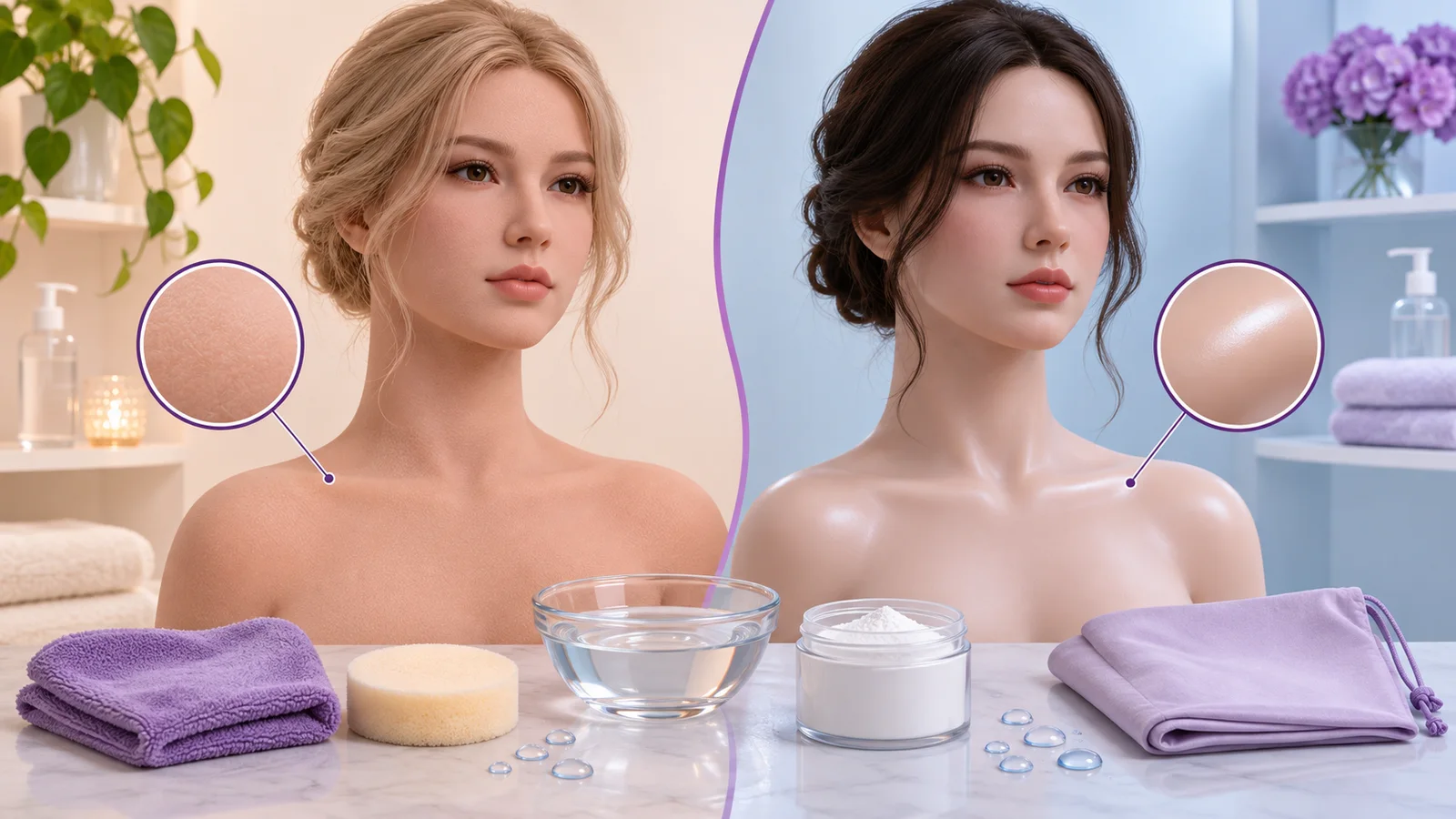
Short answer: silicone is generally easier to maintain when stain resistance, surface stability and routine cleaning are priorities. TPE can feel softer and is often cheaper, but it usually requires more care around dyes, oils, pressure and approved products. The exact formulation and model manual always matter more than generic advice.
Why material changes maintenance
TPE is a family of thermoplastic elastomer blends, not one standard recipe. Silicone dolls also use different formulations, pigments and finishes. Products sharing a material name may therefore react differently to cleaners, heat or friction.
As a broad tendency, TPE is more susceptible to oil and colour transfer, while cured silicone is more stable and stain-resistant. Neither is maintenance-free. Request instructions covering the finished product, paint, adhesive, skeleton and electronics.
| Maintenance point | TPE | Silicone |
|---|---|---|
| Routine cleaning | Usually needs more patience | Often easier to wipe clean |
| Dye transfer | Higher general risk | Generally more resistant |
| Powdering | Often recommended | Usually less necessary |
| Pressure marks | More sensitive | More stable, but not immune |
| Repair | Requires a compatible TPE product | Requires an exact silicone repair system |
Cleaning safely
Start with the manufacturer’s approved method. Disconnect removable electronics and protect openings that must remain dry. “Water-resistant” does not automatically mean that a complete doll can be immersed.
Use a soft cloth or non-abrasive sponge. Strong solvents, bleach, household disinfectants, essential oils and improvised mixtures can damage the material or painted details.
Silicone’s stable surface often makes wiping easier. TPE can retain more surface oil and require patient cleaning. A removable insert simplifies care regardless of body material.
Drying matters as much as washing
Moisture in folds, openings or joints can cause odour and material problems. Pat the surface with a lint-free towel and allow hidden areas to air-dry. Avoid hair dryers, radiators and direct heat.
Do not reassemble parts or close a storage case until everything is dry. Pay attention to seals and charging ports. TPE may attract dust while drying, so use a clean environment.
Stains and colour transfer
Dark clothing, printed bedding and some cases can transfer dye to either material. TPE is generally at greater risk, and absorbed pigment may be hard to remove.
Wash new clothing, test it on an inconspicuous area and avoid prolonged contact. Use a white or confirmed colourfast barrier for storage. If a stain appears, ask the maker before applying a remover: a treatment for one formula can damage another.
Surface finish and powdering
Some TPE manuals recommend a light layer of approved renewal powder after complete drying to reduce tackiness. Other formulations require a different routine. Silicone normally needs less powdering, though high-friction areas may become shiny.
Never substitute industrial talc, fragranced cosmetics or random powders. Follow the product instructions and avoid breathing airborne dust. This recurring step is one reason TPE is often considered more demanding.
Repairs are material-specific
Small TPE tears can sometimes be repaired with a compatible product. Silicone normally requires a repair system formulated for the exact material. Restoring colour and texture is difficult in either case.
Check warranty coverage before attempting a repair. Structural damage around the skeleton, neck or standing bolts needs professional advice. A promising video is not a substitute for manufacturer instructions.
Storage differences
Store both materials clean, dry and away from sunlight, heat and sharp objects. Support the body so heavy areas are not compressed for long periods, following the maker’s recommendations.
TPE is particularly sensitive to prolonged pressure and incompatible surfaces. Oils and dyes can migrate. Silicone is generally more stable but can still crease, tear at stressed joints or lose painted details.
Separate soft-material products unless compatibility is confirmed. Protect connectors and never suspend a doll from a point not designed for its weight.
Which is easier for a first-time owner?
Choose silicone if the main goal is a simpler routine and stronger resistance to dye transfer. Expect a higher price in many ranges, and check the actual model’s weight and softness.
Choose TPE if softness, selection or budget matters more and you can be disciplined about clothing, approved cleaners, drying and storage. Include supplies and time in the true cost.
Size and access matter too. A small model with removable components can be easier to maintain than a full-size doll, whatever its material.
Questions to ask before buying
Request the cleaning guide, approved-product list and storage instructions. Ask whether powdering is required, how stains and tears are handled, which repairs are supported and what the warranty excludes.
A responsible seller answers for the exact model. “Easy care” without details is not enough.
European Commission: General Product Safety Regulation. Always follow the exact product manual; formulations, coatings and electronics differ.